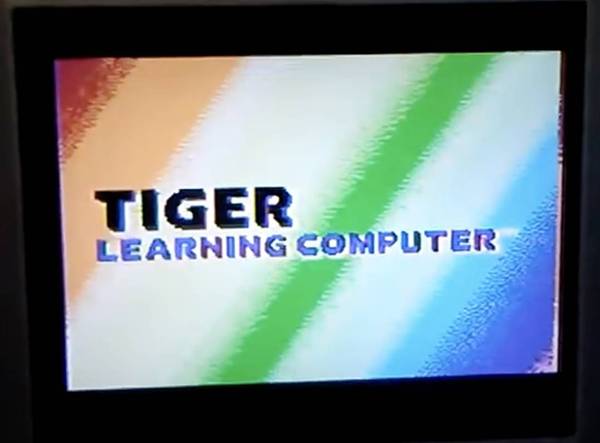
The Tiger Learning Computer, 1996.The last Apple II clone ever!
Released in 1996, this portable machine used licensed technology based on the Apple IIe, offering the promise of a new lease on life for Apple Computer Inc.’s longest-running product. The Tiger Learning Computer never made it out of the test market phase and little to none exist in the wild. But here is one of only a handfull left in the world.
I've owned it for about 20 years. I picked it up while traveling through St. Louis. This was one of only 4 cities it was sold as a test market. It was missing the power supply but I found one and powered it up and it works 100% as should. Only problem is the mouse that came with it doesn't work. You can tab through things, but it needs a working PS/2 mouse. Selling off some of my old prime nostalgia as the kids are heading to college soon and I don't display these anymore. Here's your chance to own a rare piece of Apple history.
Item comes with:
1. CPU - Tiger Learning Computer
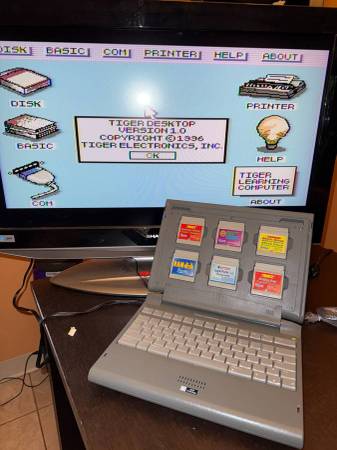
2. 6 Game Cartridges:
- Invisible Bugs
- Math Shop
- RAM Disk
- Grammar Gobble
- AppleWorks
- StickyBear
3. Power Supply
4. Mouse (not working)
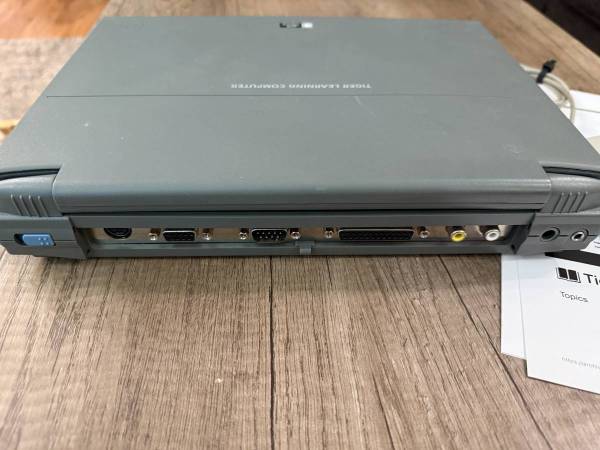
5. Audio and Video cable for monitor connection
6. Owners / Users manual
The last working one of these we can find that sold was in 2013 at Christie's Auctions for over $5000. That's over a dozen years ago so can only imagine what they are worth today.
More about this rare Apple clone computer:
Produced by an Asian manufacturer of electronic toys, it was a clone of the Apple //e computer. In 1995, Tiger Electronics, Inc. approached Apple with a proposal to revive the last Apple II model, which had been discontinued in 1993, and introduce a low-cost educational computer for children to the market. The granted license also allowed the use of Microsoft's Applesoft Basic.
The first test units went on sale in late 1996 and were available for several months in only four cities: Atlanta, Dallas, Minneapolis, and St. Louis. In total, only 16,000 test units were produced, of which a small number were sold.
Although the computer resembled a PowerBook in appearance, it did not have a screen—connection to a TV or external monitor was required. The cover that hides the keyboard is a package containing educational software cartridges, licensed AppleWorks 3.0, and one cassette serving as a disk for storing data with a capacity of 128 KB (kilobytes).
The computer, based on Apple technology, operated on an enhanced 65c02 processor and had built-in 128 KB (kilobytes) of RAM. The project remained in the prototype phase and disappeared from the market shortly after Steve Jobs' return, who ordered the termination of all licensing agreements.